2 Month Shots What You Should Know
By: Edith Bracho-Sánchez, Md, FAAP
Take y'all ever wondered why babies go vaccines starting from the day they're born? 1 big reason: the youngest of united states demand the protection the nigh. It's also the time in your child'south evolution that their immune system works best with the vaccine.
Childhood vaccination is essential because it helps provide immunity earlier kids are exposed to potentially life-threatening diseases. Of all the age groups, babies are more ofttimes hospitalized, and sometimes die, from the diseases we tin can prevent with vaccines. That'southward why most of the childhood vaccines are recommended during your baby'due south first 12 to 18 months of life.
Did yous know?
By the time a child is sometime enough to start school, they volition be protected from 14 diseases! From nascence to age vi, infants and children get vaccines to protect them from hepatitis A and hepatitis B, rotavirus, diphtheria, tetanus, acellular pertussis, Haemophilus influenzae type b, polio, pneumococcal disease, measles, mumps, rubella, varicella and influenza.
Immunization schedule for babies & young kids
The Centers for Disease Control and Prevention, the American Academy of Pediatrics and other medical groups, have all agreed on a schedule for immunizations for kids. This recommended schedule is based on enquiry showing usa the best timing for each vaccine dose.
Your pediatrician keeps track of your child's vaccines. They brand sure your child is protected at the right fourth dimension.
Baby's first vaccine
Hepatitis B is the showtime vaccine most babies receive. Information technology is given within 24 hours of birth. Your babe will become a second dose of hepatitis B vaccine when they are i month to ii months old and the third dose when they are half dozen months to 18 months old.
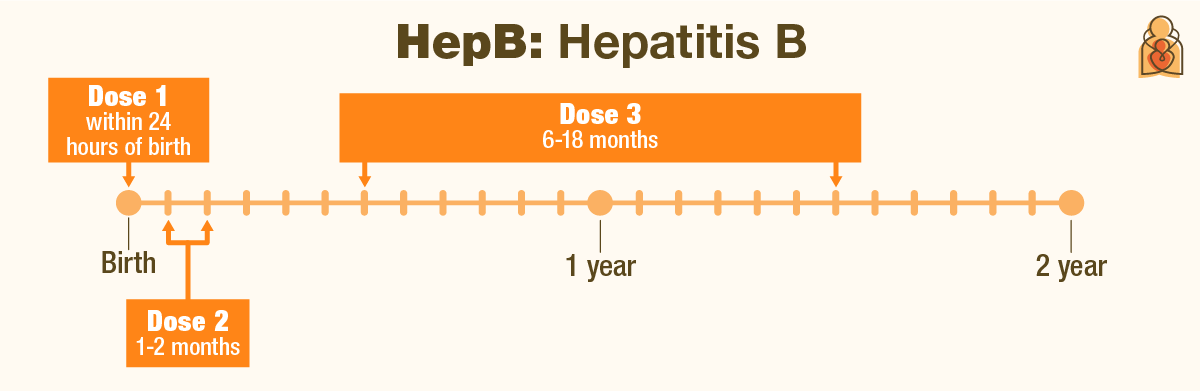
Why do nosotros requite the first dose so quickly? More than than one million people in the U.S. take long-term hepatitis B infections. And people who are infected with hepatitis B as a babe have a 90% take a chance of developing serious, chronic conditions like liver cancer in their lifetime. And because people may not know they are infected, they may spread the virus if they come in close contact with your baby. The vaccine is a safe, very effective way to eliminate that risk correct away by protecting babies from infection.
2 months old
The showtime doses of the vaccines given at 2 months of age protect babies from 7 diseases. Their names may look similar a jumble of alphabet letters. Only the messages correspond the diseases that used to cause serious infections in children.
Diphtheria, tetanus and acellular pertussis (DTaP) vaccine
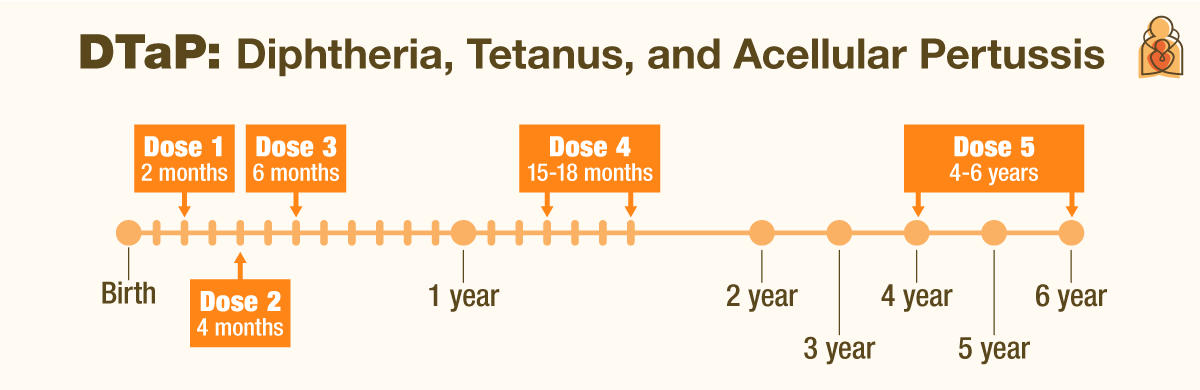
Children get v doses of DTaP vaccine. The vaccine prevents serious illness from three diseases:
-
Diphtheria: A serious throat infection that tin crusade breathing bug and eye failure. Before the vaccine, diphtheria killed one-fifth of the kids who got infected.
-
Tetanus: A deadly leaner that lives in the soil and is found everywhere in the earth. Information technology tin get into your body through a rusty nail or any kind of cut on your skin. If the germ gets in, it produces a mortiferous toxin that causes muscle paralysis.
-
Pertussis: Also called "whooping cough," it causes vehement coughing fits that make information technology difficult to breathe. Babies with pertussis may need hospital care and are at run a risk of death. Often, pertussis is spread to the infant by an adult who has not had the Tdap vaccine.
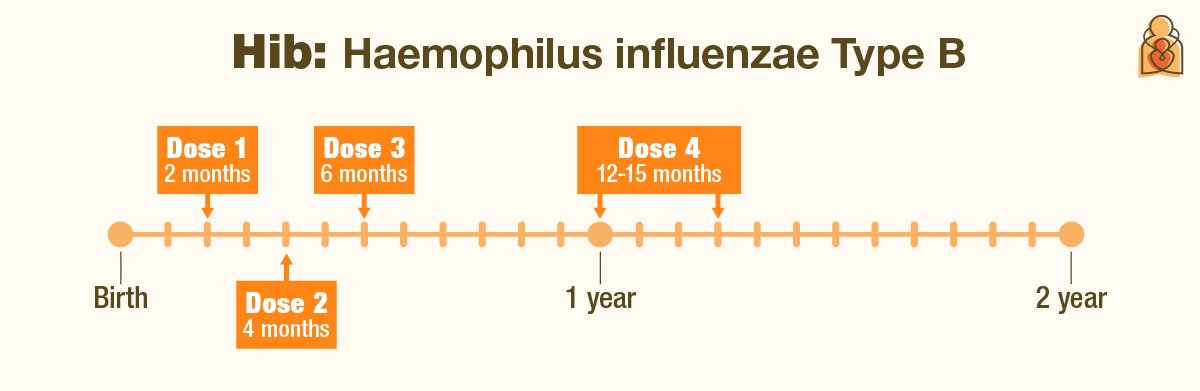
Haemophilus influenzae blazon B (Hib) vaccine (four doses) prevents several types of illness, including ear infections, pneumonia and meningitis. Infections can be life threatening. If babies have not been vaccinated and have symptoms, they may need a spinal tap to examination for the bacteria.
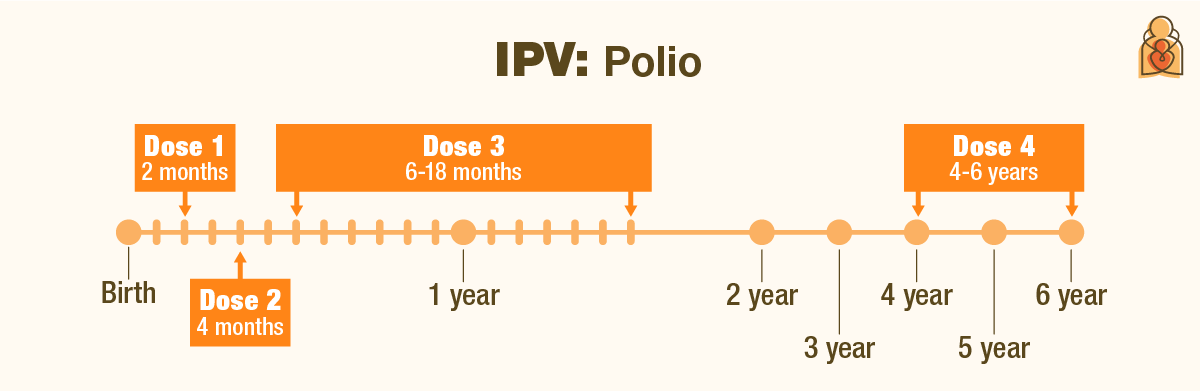
Polio vaccine (4 doses) prevents a illness that causes death and paralysis. The polio virus is still circulating exterior the U.s.a., and unvaccinated children are at risk.
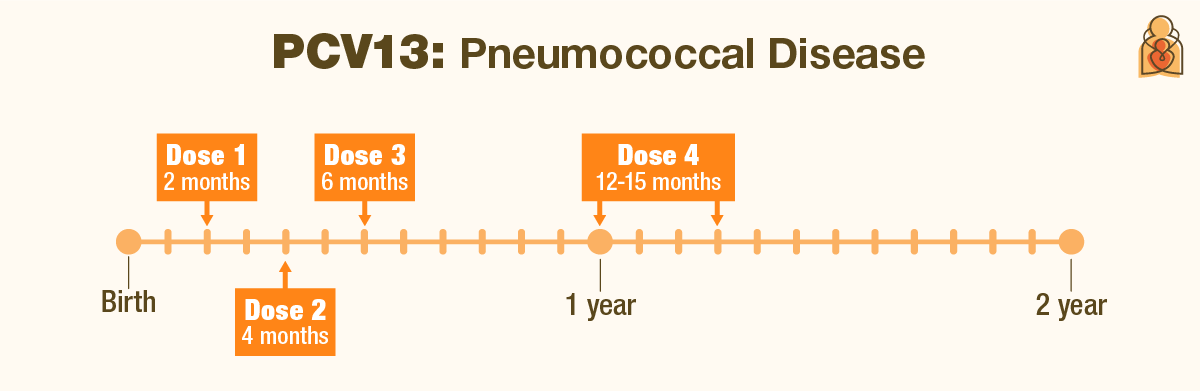
Pneumococcal vaccine (4 doses) prevents disease acquired by bacteria called Streptococcus pneumoniae. When these leaner invade the lungs, they crusade pneumonia. When they invade the bloodstream, they can cause an overwhelming infection chosen sepsis. When they invade the brain, they crusade meningitis. They can also cause ear infections—which almost parents know can be painful and frequent. Since we have had this vaccine, the number of kids suffering all of these illnesses has dropped dramatically.
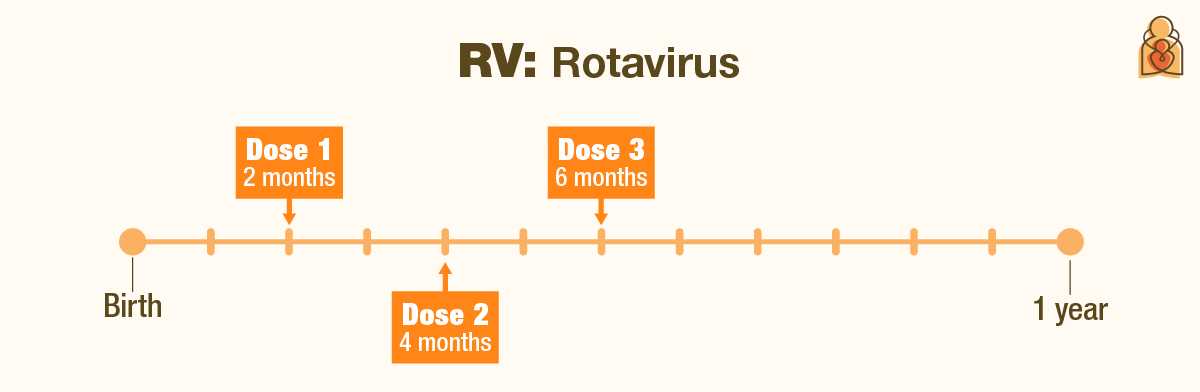
Rotavirus vaccine (2 or 3 doses) stops the main cause of diarrhea in children. This virus spreads very hands—on your hands, muddy diapers or toys, and through the air. Rotavirus infections cause severe, watery diarrhea, vomiting, fever and abdominal hurting. Sometimes the virus causes children to become so dehydrated that they need hospital care.
vi months old
The influenza vaccine is recommended for everyone starting at half dozen months of age. The start time your child gets the flu vaccine, they will too need a second dose 4 weeks later. Even healthy kids can develop severe complications that send them to the hospital. Flu viruses change from year to yr, and then everyone needs to get a influenza shot each year. Annual flu shots keep children from severe disease.
12 to 18 months erstwhile
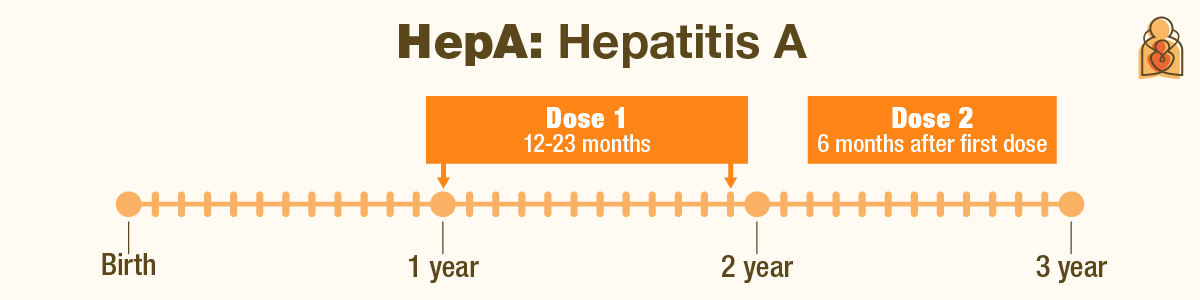
At your child's starting time birthday checkup (or soon after), they will get shots that protect them from 5 more diseases. They also may get 2d, third or fourth doses of the vaccines they started during the first year.
Measles-mumps-rubella (MMR) vaccine
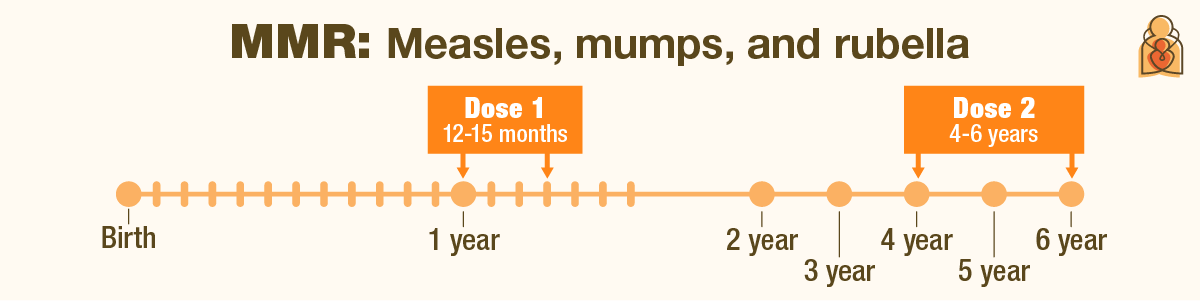
Children get 2 doses of MMR vaccine. Most people who are vaccinated with MMR volition be protected for life. The vaccine prevents serious illness from iii diseases:
-
Measles can cause fever, cough, runny olfactory organ, and red, watery eyes, commonly followed by a rash that covers the whole body. Information technology tin atomic number 82 to seizures (often associated with fever), ear infections, diarrhea, and pneumonia. Rarely, measles can cause brain damage or decease.
-
Mumps can crusade fever, headache, muscle aches, tiredness, loss of appetite and swollen and tender salivary glands under the ears. It can lead to deafness, swelling of the brain and/or spinal cord covering, painful swelling of the testicles or ovaries and, very rarely, decease.
-
Rubella can cause fever, sore throat, rash, headache and eye irritation. Information technology tin cause arthritis in up to half of teenage and adult women. A meaning person who gets rubella could have a miscarriage or the baby could be born with serious birth defects.
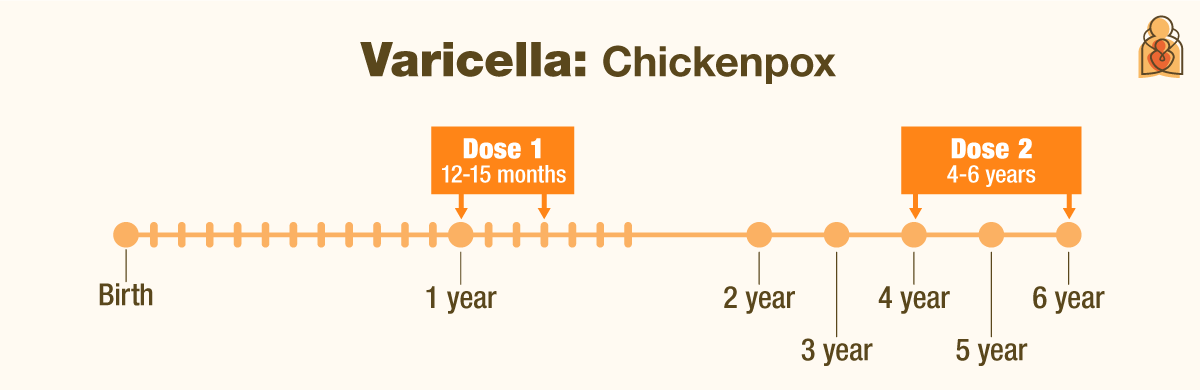
Varicella vaccine (ii doses) prevents "chickenpox," which used to infect 4 1000000 people in the United States every year. More than than 10,000 were hospitalized, and more than 100 died. A mild instance can crusade a kid to miss school for a week or more.
Hepatitis A vaccine (two doses) gives lifelong protection from a serious liver disease. The affliction can spread through food or by contact with an infected person—even someone who doesn't testify whatever symptoms.
Fun fact: Vaccines protect babies before birth!
It's true. Babies become antibodies during pregnancy from some vaccines their mothers take had. For example, the baby is protected for a curt time after they are born if their mother has had the measles vaccine.
However, this protection moms requite their babies during pregnancy starts to wear off at effectually 1 year of age. That's why, when they are 12 months to 18 months old, babies become a shot to go on them protected from measles and ii other diseases (the MMR vaccine). So, a 2nd dose of MMR vaccine is recommended when kids are four years erstwhile. The second dose acts similar a reminder for your child's immune organisation. Enquiry shows the MMR vaccine is incredibly effective when given at these ages.
Think
We know from decades of enquiry, in millions of children, that the vaccines work best at these ages, and with this spacing between doses. And we know they are safe when given on this schedule.
The immunization schedule helps children develop life-long immunity and protect them and others from serious diseases. Finally, if you lot accept questions, talk with your pediatrician. Nosotros are here to partner with you to help your child stay healthy—and thrive.
More data
- Recommended Immunization Schedules
- Vaccine Condom: Get the Facts
-
Why Your Newborn Needs a Vitamin Thousand Shot
About Dr. Bracho-Sánchez
 Edith Bracho-Sánchez, Medico, FAAP, is a primary care pediatrician and the director of the pediatric telemedicine program at Columbia University Irving Medical Center. She was born and raised in Caracas, Venezuela, obtained her medical caste from New York University and trained in pediatrics at The Children'due south Hospital of Philadelphia. She lives in New York City with her husband and son. Follow her on Twitter @DoctoraEdith.
The information independent on this Spider web site should not be used as a substitute for the medical care and advice of your pediatrician. There may be variations in treatment that your pediatrician may recommend based on individual facts and circumstances.
Source: https://www.healthychildren.org/English/safety-prevention/immunizations/Pages/Your-Babys-First-Vaccines.aspx
0 Response to "2 Month Shots What You Should Know"
Post a Comment