Beef Smelling Gas After Eating Beef
Loftier-protein diets are having a moment. In any grocery store you can at present purchase a protein bowl, pick up a poly peptide box of eggs and nuts for lunch, or snack on a poly peptide bar.
But there's evidence that restricting which proteins you eat — particularly cutting back on meat — could be important for healthy aging. The surprising reason: it forces the tissues to brand hydrogen sulphide (H2S), a gas that'due south poisonous if inhaled and smells like rotten eggs, but promotes wellness within the body.
As a physiology researcher, I have long been interested in the strange role of H2S in the body. This is not a gas anyone wants around. Information technology stinks, is a component of flatulence, and its toxicity has been linked to at least one mass extinction.
And yet, the trunk naturally produces pocket-sized amounts of it equally a signalling molecule to human action as a chemical messenger. Now, nosotros are starting to empathize the link betwixt nutrition and H2S production.
Diet restrictions that increase longevity
Less can be more when it comes to nutrient. When scientists accept put organisms on advisedly balanced merely restricted diets, these organisms have substantially increased healthy lifespans.
This holds truthful for yeasts, fruit flies, worms and monkeys. In mice, such diets reduce cancer risk, strengthen the allowed system and amend cerebral function.
But because crumbling and longevity are complex processes, it has been hard for researchers to pin down the mechanisms at piece of work. Recent studies have shed new light, and information technology is apparent that H2S plays a crucial role.
Studies since the 1990s have shown that reducing intake of certain sulphur-containing amino acids, the building blocks of proteins, can increment longevity in rats by around 30 per cent. More recently, a collaborative team involving me and led by scientists at Harvard, performed a serial of animal studies in which we restricted the intake of ii sulphur amino acids — cysteine and methionine — to study what furnishings this had.
It caused the animals to ramp up production of H2S in their tissues, which triggered a cascade of benign effects. These included increased new blood vessel generation, which promotes cardiovascular health, and better resistance to oxidative stress in the liver, which is linked to liver illness.
Merely it remained to be seen whether similar effects would occur in humans. Earlier this twelvemonth, a study using data from the xi,576 adults in NHANES III, the U.Southward. national nutrition survey, delivered evidence that they do. Information technology plant that reduced dietary intake of these sulphur amino acids is linked to lower cardiometabolic risk factors, including lower levels of cholesterol and glucose in the blood. Cardiometabolic risk factors are those linked to middle disease, stroke and diabetes.
Swallow less meat, live longer?
The upshot of this inquiry is that there's proficient evidence that limiting intake of foods containing high levels of sulphur amino acids can reduce the risk of chronic diseases like diabetes and heart illness, and promote healthy aging. In Northward America, well-nigh of us are a long way from achieving this. Considering these sulphur amino acids are abundant in meat, dairy and eggs, which feature prominently in our shopping carts, we swallow on average 2.five times our daily requirement of them.
Cherry-red meat is particularly high in sulphur amino acids, but fish and poultry white meat also contain a lot (the dark meat has less). Switching to plant-based proteins would aid reduce this intake.
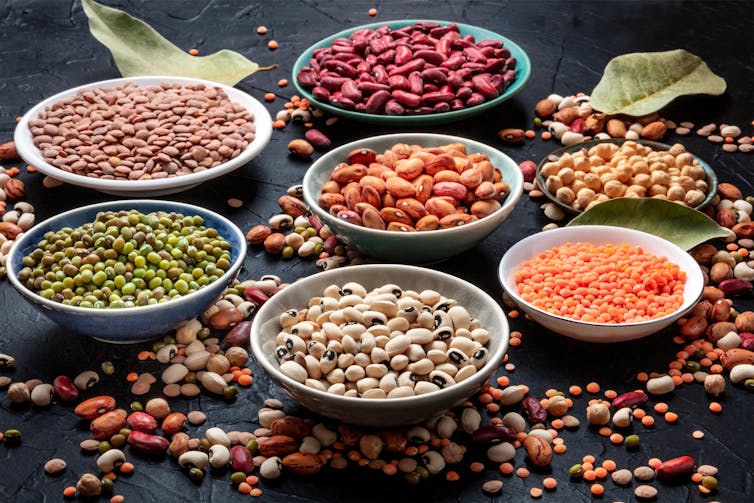
Beans, lentils and legumes are good sources of poly peptide that are also low in sulphur amino acids. Just beware: soy poly peptide, which is the ground of foods like tofu, is surprisingly high in sulphur amino acids. Meanwhile, vegetables like broccoli comprise lots of sulphur just not in amino acrid course.
I important caveat is that sulphur amino acids play vital roles in growth, and then children should non adopt diets that are low in them.
Other roles for H2S
Information technology might seem odd that a toxic gas can help maintain health, but it may reflect the origins of life on early Earth when the atmosphere was much richer in sulphur gas than it is today. Indeed, we are starting to appreciate how key H2S signalling may be. For case, information technology has also been shown to reduce inflammation, opening the door to potential new treatments for arthritis or potential employ as a painkiller.
The play a joke on is delivering H2S where it's needed — safely. Several pharmaceutical companies are working on compounds that bind information technology while in transit through the body, and release it in tiny doses in the tissues. In fourth dimension, these could exist used equally preventive measures to support healthy aging. This would exist useful because the drawback of a low-sulphur amino acid diet is that humans are notoriously bad at sticking to such plans long-term.
In the lab, we can control experimental diets. In the existent globe, people snack or grab a burger when they don't want to melt. If delivery mechanisms can exist made reliably and cheaply enough, it could be possible to proceeds the health effects of increased tissue H2S without dictating what people eat.
Source: https://theconversation.com/the-surprising-reason-eating-less-meat-is-linked-to-a-longer-life-a-smelly-toxic-gas-151187
0 Response to "Beef Smelling Gas After Eating Beef"
Post a Comment